
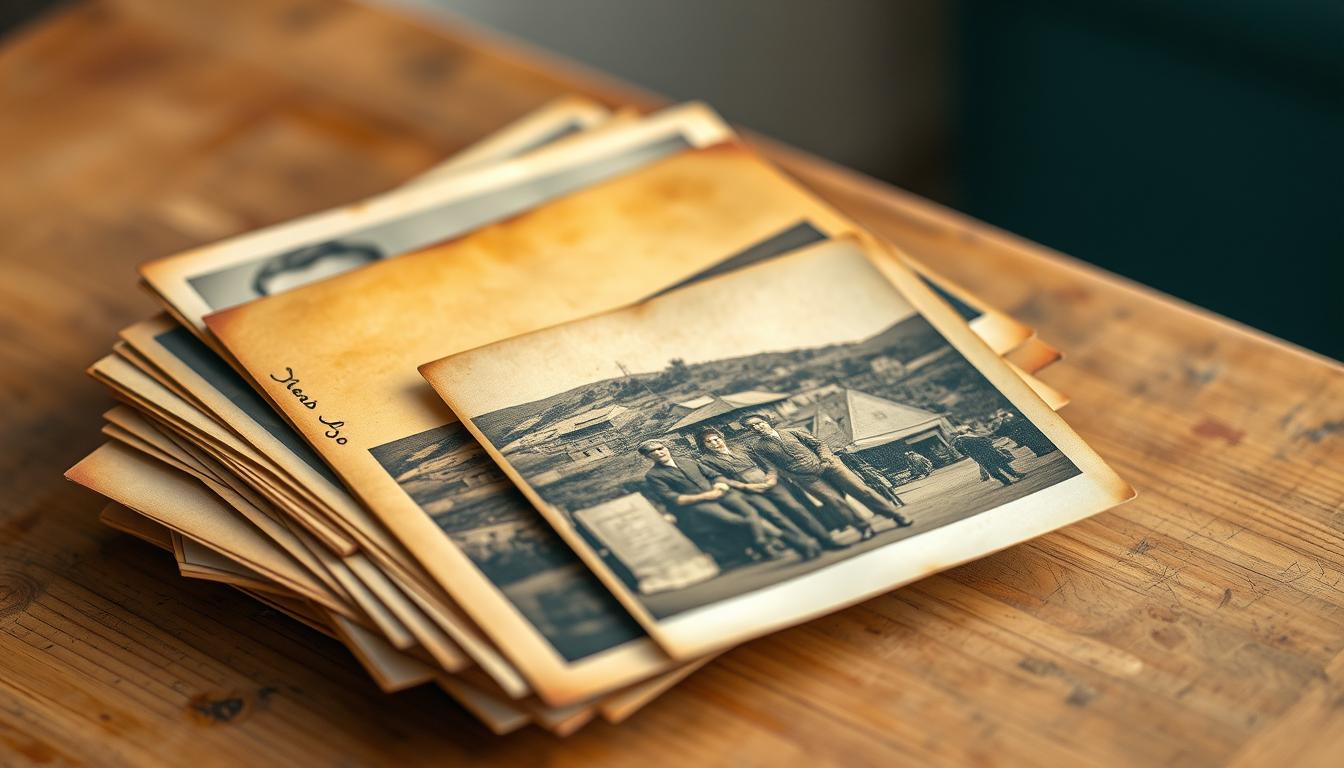
An old photo is more than just a picture. It’s a window to the past. Vintage photos, with their worn edges and sepia colors, keep memories alive. Looking at an old photo can bring back forgotten moments, linking us to our history.
Old photos are like finding a lost letter. They show us parts of our lives we might have forgotten. From the 1830s to the 1860s, daguerreotypes captured life’s moments for the wealthy. Now, these photos remind us that every picture tells a part of our shared story.
The Significance of Old Photos
Old photographs are more than just pictures. They are windows to the past. The photo significance comes from their ability to capture moments that connect us across generations. A daguerreotype from 1840, for example, shows the patience and dreams of its subject.
These images connect us to our ancestors. They show how technology and society have changed over time. This connection is rooted in photographic history.
Every old photo carries emotional memories. A child’s first picture, a wartime photo, or a family gathering all bring back photo nostalgia. The change from serious 19th-century photos to happy 20th-century ones shows how culture has evolved.
Before 1845, smiling was hard because of long exposure times. But by the 1920s, thanks to Kodak, photos became joyful keepsakes.
An 1880s cabinet card with fancy ads on the back is a reminder of photography’s luxury in the past. These items make history feel personal. Even though cyanotypes or platinum prints are fragile, they connect us to different times.
Preserving Family History Through Photos
Starting to preserve family history through photos means understanding their fragility. Photo archiving basics start at home. Store prints in acid-free folders, away from sunlight and damp basements.
Old photo albums with sticky pages or plastic sleeves can yellow over time. Replace them with preservation-grade materials. Even digital files need care; save them on multiple devices to avoid data loss.
Every generation adds to the family archives. Label photos with names, dates, and locations before memories fade. Digitize heirlooms like the 1940s photo of four generations, ensuring their photographic legacy survives.
For delicate items like the 1868 Freedmen Bureau contract, consult professionals. Use the American Institute for Conservation (AIC) or RootsTech’s free preservation classes.
Light and moisture are silent enemies. Keep albums in cool, dark spaces. Use nitrile gloves when handling old photos to avoid oils.
Avoid tape or glue repairs—these trap moisture and damage surfaces. Cloud storage and external drives create backups. But update files every few years to combat format obsolescence.
Family history preservation requires action today. Write stories on index cards stored with photos. Teach kids to interview relatives about old snapshots.
Every saved detail adds depth to your family’s narrative. Turning scattered memories into a lasting family history preservation project. Start small—organize one box, scan a dozen prints—and let the legacy grow.
Techniques for Restoring Old Photographs
Restoring damaged photos begins with scanning them. Start by scanning at 400–600 DPI using TIFF or RAW formats. This captures all the details. For physical repairs, use acid-free tape on tears.
To gently loosen stuck photos, submerge them in distilled water. This helps separate the layers.
Digital tools like PhotoGlory make fixing photos easy with just one click. For more detailed work, Adobe Photoshop’s tools are great. The healing brush and clone stamp tools can remove scratches and stains.
A white balance tool can fix yellowing, and adjusting levels can improve contrast. Many users see success with automated software. But, manual adjustments often lead to more natural results.
Professional services can cost $50–$200 per image for complex repairs. Even scans from 15 years ago can be improved. Always label files and add metadata tags to keep your restored photos organized.
“Even severely damaged photos often hold recoverable details,” say experts. Proper tools can reveal smiles and memories once thought lost.
When working digitally, be careful not to over-cloning. This keeps textures real. Save final images as high-quality JPEGs or TIFFs for long-term preservation. Remember, 40% of users prefer manual fixes for delicate originals. With the right techniques, photo restoration connects past and present, keeping stories alive for future generations.
The Magic of Black and White Photography
Monochrome images have a timeless quality that goes beyond trends. Black and white photography makes us focus on contrasts, textures, and emotions. It strips away distractions to show raw beauty. Photos by Ansel Adams or Vivian Maier, for example, are timeless because they tell human stories, not just fashion.

Film photography is coming back, showing the value of capturing black and white. Kent DuFault’s Better Black and White teaches digital users how to master this craft. It shows how tonal ranges and shadows add depth. Even now, over 70% of people find monochrome images nostalgic, like those from the mid-20th century.
“Black and white photography is the soul of vision,” says photographer Diane Arbus. “It forces you to see what matters.”
Today, we have tools to turn color shots into striking monochrome images. But the core remains the same: timeless photos are about light’s dance on faces and landscapes. Whether from old film or digital creation, black and white photography tells stories in a simple, honest, and lasting way.
Sharing Old Photos in the Digital Age
Digitizing family heirlooms opens new ways to share cherished moments. Services like photo scanning services convert fragile prints into digital files. This preserves details for generations. Platforms like family photo albums online—such as Google Photos or Facebook—make it easy to organize and digital photo sharing with relatives.
Yet, privacy matters: uploading photos of ancestors born before the internet era requires care. Always check platform privacy settings to control who views these social media memories.
Professional photo digitization ensures clarity. Scanning at 600 dpi captures fine details, while 1,200 dpi works best for large prints. TIFF files retain quality but take more storage space than JPGs.
For storage, Apple One’s 50 GB plan or Amazon Prime’s unlimited photo space offer affordable options. Always back up files across multiple services to prevent loss.
Sharing scanned photos can spark family stories. Collaborative platforms let cousins and grandparents tag people or add notes. But remember: once online, photos may stay forever.
Balance nostalgia with caution. By choosing secure platforms and respecting privacy, you honor both the past and modern digital ethics.
The Trend of Vintage Photography
Today, photographers are going back in time, loving the vintage photography trend. They use retro photo filters on phones and enjoy the analog photography revival. This mix of old and new is all about creativity.
Couples in 2024 love instant cameras like Polaroid’s new Originals for their engagement photos. They prefer real prints over digital photos. Also, brands like Fujifilm and Kodak are doing well, thanks to the film photography comeback. Sales of 35mm and medium format films are at an all-time high.

Professionals use films like Kodak Portra for warm skin tones or Ilford HP5 for sharp black-and-white shots. These films help create the look of old photos. Even digital photographers use apps to add “film grain” or “light leak” effects.
NYC-based artist Clara Bennett says, “Imperfections like grain aren’t flaws—they’re storytelling.” Her work combines 1970s soft focus with modern poses. This shows that vintage can be modern and fresh.
Now, 489,251 online projects use retro aesthetics, and 3.5 million social followers follow these trends. Brands like Lomography and Impossible Project are doing great, selling instant cameras. As we get more digital, this vintage photography trend offers a hands-on, meaningful way to capture memories.
Creating a Family Heritage Wall
Turn old family photos into a living story with a heritage wall display. Over 80% of families find value in showing off heirlooms through photo gallery walls. This turns empty spaces into cherished stories. Start by picking a mix of old and new images for balance.
Group photos by theme, like holidays or occupations, to show shared traditions. A well-organized family photo arrangement can make any room a celebration of lineage.
Protect fragile heirlooms with proper framing. Use UV-filtering glass and acid-free mats to prevent light damage. Hang displays in low-light areas like hallways or staircases to keep them safe.
Mix framed prints with memorabilia like travel postcards or handwritten notes for depth. This adds to the story.
Don’t let clutter overwhelm your home photo displays. Rotate seasonal favorites or create a modular layout for new additions. One family used a powder room wall for a mix of old and new photos.
Another repurposed thrift-store frames to save money. Emphasize personal style over perfection; even a mismatched collage tells a story.
Start small: cluster three to five photos above a sofa or fireplace. Use washi tape to test layouts before committing. Remember, 100% of materials can come from existing resources like old recipe cards or ticket stubs.
Let your walls evolve as your family does, making history a living part of daily life.
Old Photos as Art

Antique photographs go beyond time to become vintage photography as art. Photo collectibles like 8×10 glass negatives or 1900s Kodachromes are now in galleries and homes. People collect them for their beauty and history.
A 1905 portrait with a cracked emulsion or a 1930s cityscape with a grainy texture can stand up to today’s art. This shows how old photos can be as powerful as modern art.
When looking at antique photographs, we consider their condition, rarity, and who took them. Even unknown found photography can be amazing because of its unexpected beauty. It’s important to respect the original photo while adding new meaning to it.
“The photographic art market thrives on stories,” says Paul Black, whose lab sees more people wanting to restore old photos.
Today, more young people are into film photography. Ilford says 30% of its film buyers are under 35. This shows that even though Kodak is not as big as it used to be, people are finding new ways to enjoy photography.
These old photos are now taking over spaces that used to be for oil paintings or sculptures. They are making a big impact in the art world.
“A 1900s snapshot can hold as much emotion as a Da Vinci sketch,” notes a New York collector, highlighting how even unattributed images find new life in creative hands.
To start, look for local auctions or online platforms. Begin with something small, like framing a 1920s postcard. Then, build a collection that tells a story through history and art. The beauty of these photos comes from how we see them today.
Uncovering Hidden Histories in Old Photos
Old photographs are full of stories waiting to be found. Photo detective work starts with looking closely at hidden photo clues. These clues can be in the clothes, the background, or even studio stamps.
A faded portrait might show its time through hats or fabrics. This is key in photograph analysis. For example, Esther and Nannie Lee’s 1919–1922 photo was dated by looking at the trees and clothes.
Every photo is a piece of history. Studio logos or postmark dates can tell us where and when a photo was taken. Genealogical photography often reveals surprises. Handwriting analysis of family letters with photos can correct family trees.
One researcher found a Civil War soldier’s regiment by looking at buttons in an old photo.
Start by listing clues: What era’s fashion does this dress show? Are there landmarks in the background? Online tools like the Library of Congress’s digital archives can help.
Forums like Find a Grave connect users with experts in genealogical photography. Local historical societies also have databases for architectural or regional style comparisons.
Even unsolved mysteries are valuable. A 1940s family reunion photo might have a damaged corner or blurry faces. But it could hint at traditions or migration patterns. Each find, big or small, adds to our shared history.
The Role of Old Photos in Documenting History
Old photos are more than keepsakes—they tell silent stories. Historical documentation through documentary photography has uncovered injustices and saved moments that shape our history. Jacob Riis’s 1890 book *How the Other Half Lives*, with photographic evidence of tenement slums, led to New York’s housing law reforms. Lewis Hine’s documentary photography of child laborers in the early 1900s pushed for stricter child labor laws. These images changed public opinion and are now part of historical photo archives that teach us today.

Even everyday photos have power. A faded school photo or a town parade captures community photo history—details often missing from official records. Local archives and digitization projects now save these fragments, making sure stories of everyday life last. Historical photo archives like the Library of Congress or regional museums protect millions of images, from Civil War battlefields to 19th-century family portraits.
But not all stories were captured equally. Early documentary photography often missed marginalized groups, leaving gaps in our understanding. Today, efforts to collect overlooked photos aim to fill these gaps. Your attic’s dusty albums might hold historical documentation of a neighborhood’s evolution or a family’s migration. Every image is a thread in the tapestry of time, waiting to be rediscovered.
Tips for Writing Captions for Old Photos
Photo captions make old photos special. Start by writing down names, dates, and places. Make sure to identify everyone in the photo. For example, say “Aunt Maria’s 1985 graduation” instead of guessing.
Go beyond the basics to share stories. Add a memory: “Here’s Grandma baking pies for the county fair—her secret recipe is in the kitchen drawer!” This makes the photo more engaging. For instance, a beach photo with “Dad’s first fishing trip with the twins” adds depth.
Keep captions short and sweet. This appeals to 70% of readers who like quick reads. Use phrases like “Summer 1972: Mom’s first car” or “Uncle Tom’s wedding dance—rain boots optional!”
“Every picture tells a story, and this one spells: Mischief!”
Don’t forget about digital storage. Use tags like “1999 family reunion” for digital files. Name images clearly: “1940s_kitchen_group.jpg” helps keep albums organized. Always keep original captions from old prints.
Interview older family members while you can. Ask them about the photos. Questions like “Who’s the man in the middle?” or “Why was this photo kept?” reveal stories. Remember, 65% of viewers feel a connection to well-captioned photos.
Find the right balance between short and meaningful captions. A simple “Grandpa’s first airplane ride, 1953” works well. Avoid unnecessary words. Let the caption guide the viewer to the photo’s essence.
The Emotional Journey of Revisiting Old Photos
Old photos are more than just pictures. They hold emotional memories that shape our identity. They can bring back happy moments or remind us of tough times. Research shows that 65% of people feel joy when they look at family photos again.
Sharing these moments can also bring families closer. In fact, 70% of families say they feel more connected after talking about old photos. Reflecting on these memories can even help us feel more satisfied with life. And, 20% of people who regularly look at old photos say they feel happier.
Even tough memories can be healing if we approach them with care. Therapists use old photos to help people deal with loss. They turn sadness into understanding.
Make time to look through your photos carefully. Organize your digital photos to keep them safe from damage. About 25% of physical photos fade each year if not preserved.
Write captions for each photo to share its story. This connects you to your past and to your family. If looking at photos feels too much, start with a few at a time. The goal is to learn from the past, not to forget it.
Every photo can start a conversation. Hang your favorites on the wall for daily inspiration. Or share slideshows at family gatherings to share stories. These photos are more than just memories. They are the threads that connect us to our past and to each other.