
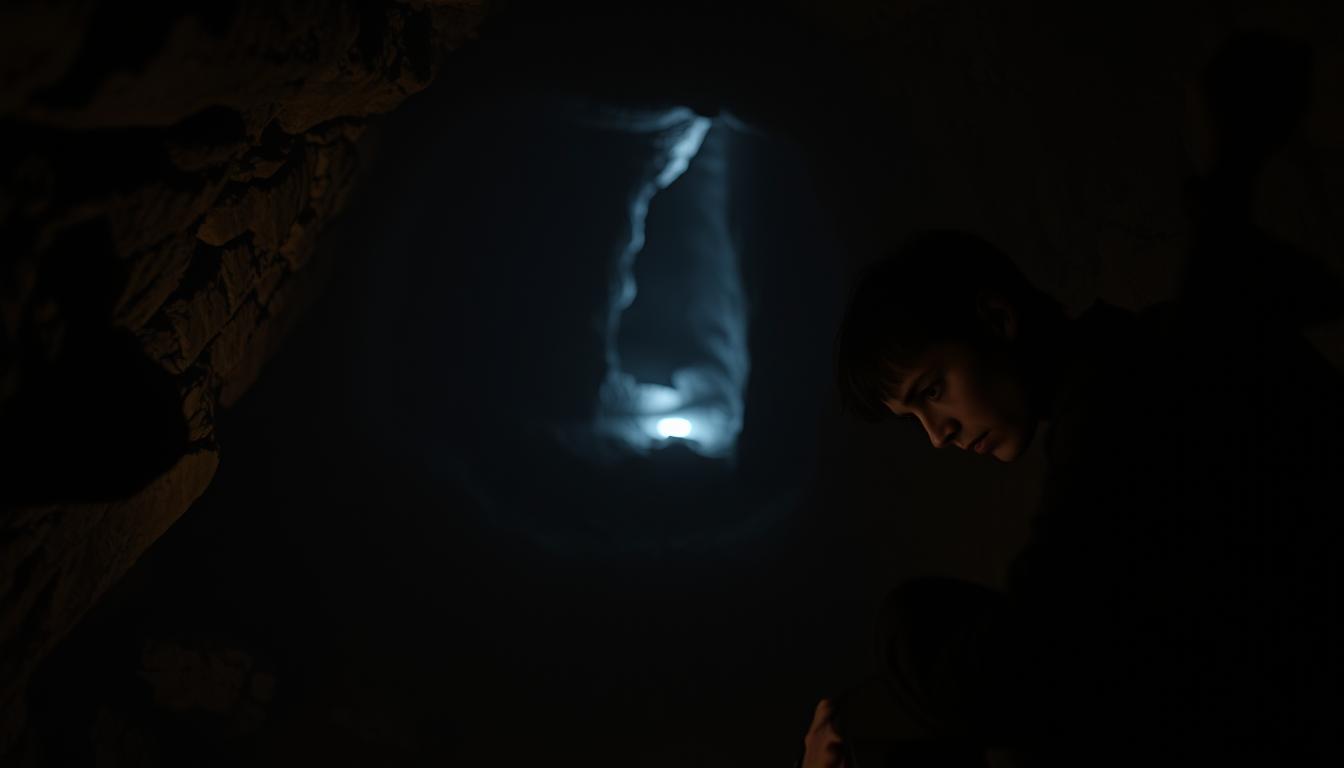
Humans and heroes often find themselves trapped in impossible situations. Their survival stories, from military escapes to emotional battles, show the power of determination. Whether facing physical barriers or mental doubts, the will to escape is what keeps us going.
Barry Allen, aka The Flash, knows what it’s like to be trapped. His journey back from the Speed Force is a testament to overcoming isolation. Every survival tale shows that hope is what drives us to escape, even when it seems impossible.
This article dives into both physical and emotional traps. We’ll see how The Flash’s speed and real-world strategies help us break free. We’ll also discover the true meaning of being trapped and why hope is our strongest ally.
The Concept of Being Trapped
Being trapped between walls or in one’s mind is a common human experience. Confined spaces like locked rooms or tight tunnels can cause claustrophobia. This fear is rooted in our survival instincts. On the other hand, psychological imprisonment locks people in cycles of regret or unfulfilled goals.
Imagine a soldier breaking out of a military base versus a student dreading school hallways. Their struggles show two sides of the same coin.
Science shows how limitations affect our bodies. Rapid heartbeats, sweating, or panic attacks signal danger, even in safe situations. For those with cleithrophobia, small spaces can cause physical distress. Studies show over 10% of people face such phobias, showing it’s a common challenge.
Psychologists say feeling stuck isn’t just mental—it’s evolutionary. Ancient humans feared enclosed dangers like predators. So, our modern minds react the same way. Today, this shows as anxiety in MRI machines or crowded elevators. Even without clinical phobias, many feel trapped by routines or past experiences.
“Cognitive immobility” traps minds in the past, making it hard to embrace the present.
Understanding these patterns helps. Whether escaping a basement or a toxic job, recognizing the roots of entrapment is key. Awareness turns fear into a bridge toward change.
Setting the Scene
An abandoned military facility with automated drones patrolling its perimeter sets the stage for a hostile environment. Every shadow and sensor becomes a threat, making exits dangerous surroundings. Characters must avoid motion detectors and armed guards, where one wrong move triggers alarms.
A school gymnasium under lockdown becomes an unfamiliar territory. Its familiar bleachers and locker rooms now echo with tension.
In high-stakes situation stories, settings like these add urgency. A prison’s barred windows or a fog-laden forest each demand unique escape tactics. The military base’s sterile corridors contrast with the gym’s cramped social dynamics, showing how entrapment scenarios vary.
Writers use these spaces to mirror characters’ isolation. Whether trapped by surveillance tech or societal rules, each setting has its own challenges.
Lighting and sound design add to the suspense. Flashlights in dark forests or drones’ hum in a base build tension. Audiences feel the weight of choices: wrong turns in a maze-like building or hesitation in a crowded room. Every environment becomes a character, pushing heroes toward clever solutions or fatal mistakes.
The Feeling of Desperation
When we’re trapped, our body kicks into fight or flight mode. This adrenaline rush makes our heart race and our focus sharp. But it also clouds our judgment.
Characters like Airi, who uses black powder to escape, show the power of survival instinct. But it can also lead to panic. On the other hand, some, like those in a dodgeball game, freeze up due to anxiety.
Time pressure makes these reactions worse. Sakamoto’s decision to lose his arm shows how desperation leads to quick choices. Studies show many workers feel trapped in their jobs, facing similar struggles.
Even everyday stress, like deadlines or money worries, triggers these responses. Viktor Frankl’s work shows that finding meaning can boost resilience by 30%. This gives hope in tough times.
Desperation isn’t just physical. It’s also a cycle of doubt. Questions like “Can I escape?” and “What if I fail?” keep looping. This is fueled by cortisol.
But anger can signal a change. Research shows it can help us take back control from despair. Programs like the Confidence Mindset Program try to change negative thoughts. The key is to recognize when time pressure affects our choices. Then, we should take a moment to breathe before acting.
Tools for Escape
Having the right tools and survival gear can save your life. But, being resourceful is often more important than having the right tools. For example, tempered glass can be broken more easily with spring-loaded tools than with hammers. Yet, laminated windows are hard to break with any tool.
It’s important to know what kind of windows your car has. In 2018, 33% of cars had laminated glass, thanks to safety standards. AAA says that standard tools won’t break laminated glass. So, what can you do? You need to think creatively.

AAA advises drivers to identify their vehicle’s window type to pick the right escape strategy.
In emergencies, being able to improvise is key. You can use black powder to stop bullets or steel wires to trap things. Even a flash drive can be a lifesaver if it has important data. Survival is not just about having the right gear; it’s about being ready mentally.
In 2017, 21,400 people were injured when they were thrown from cars. Quick thinking saved many lives. It’s important to test your tools on soft wood before you need them. Spring-loaded tools are better than hammers in tests, but being able to adapt is the most important skill.
Lists of survival gear often forget about the human factor. Being creative and thinking on your feet can turn any situation around. Whether it’s breaking glass or outsmarting threats, your mind is the most powerful tool. Always check your car’s windows and practice with tools. Being resourceful and calm is the real survival gear.
The Role of Hope
Hope is more than a feeling; it’s the fire that drives us to keep going. When Airi said, “Either everyone lives, or everyone dies!” she showed the courage to act against all odds. This spirit is like Thomas Edison’s 2,000 tries to invent the lightbulb. Each failure was a step closer to success, showing that willpower can turn struggles into progress.
“Stand and see the salvation of the Lord.”
In the Exodus story, the Israelites faced total despair but held onto hope. Their determination turned fear into victory. Psychologist Brené Brown says hope is about setting goals, finding ways, and believing in ourselves. Even when faced with challenges, like career uncertainty or extreme heat, we can keep moving forward.
False hope can trap us, but true hope inspires us to act. Edison’s optimism never wavered, even after 2,000 failures. The Israelites’ faith in a better future saved them. Mental strength grows as we face and overcome challenges, turning obstacles into opportunities.
Hope is not just waiting; it’s the quiet determination to keep going. The 2015 Minnesota relocation showed that even when plans change, we can adapt and grow. Choosing to persevere, even when odds are against us, keeps our motivation alive. Hope is about the courage to believe in a better future, even when it seems impossible.
Key Characters in Escape Narratives
Escape stories rely on hero archetypes and character roles to move the plot. Group dynamics are key to success. Leaders like Sakamoto guide others through danger, while followers like Hayato find hidden strengths. These roles are essential for survival.

Sakamoto’s readiness to risk himself is common in real escapes. Leaders face danger first. Followers, though quiet, find clues others miss. Airi, with her strategic and supportive skills, shows the importance of diverse abilities.
Even those who seem reluctant, like Hayato, play a big part. This shows every role is important. The 1944 Great Escape proves this, showing how balance is needed for success.
In movies like Saw and Escape Room, these roles are clear. But in real life, it’s more complex. A leader’s choice to risk themselves, like Airi, is a survival strategy. Followers also have a big impact, building trust and urgency.
Historical and fictional escapes show the same thing: success comes from working together. When characters know their roles, they turn chaos into a plan. The Saw series is a great example, showing how these roles add depth to stories. Without them, escapes would lack excitement, a lesson for both movies and escape rooms.
Tactics for Evading Capture
Successful escape tactics need strategic thinking. They mix hiding and running well. Military tactics use steel wire traps and black powder to confuse pursuers.
The Maine hermit evaded capture for 30 years. He used clever tricks to mislead his pursuers. This shows patience can be more powerful than speed.
Nature helps in evading capture. Snowfall hides tracks, and moving downwind reduces scent trails by 80%. The BLISS principle helps hide better. Even in cities, hard surfaces like concrete reduce footprints by 60%.
Psychology plays a big role in success, with 70% of success coming from calm decisions. Unpredictable moves, like doubling back or creating false trails, confuse trackers. Most pursuers follow patterns, so breaking them increases your chances.
The Maine case used over 1,000 burglaries to evade capture. This shows strategic thinking is more important than speed.
Being adaptable is key. In cities, hide in plain sight. In forests, move quietly. Remember, 50% of success comes from blending with the terrain. Knowing when to stay hidden or make a move is the first step in outsmarting pursuers.
Overcoming Obstacles
Escape scenarios need problem-solving and breaking through barriers. These can be physical, like locked gates, or mental, like fear. Sakamoto, for example, used his creativity to overcome his loss of an arm.
Airi, despite her limp, found new ways to move forward. She learned to face challenges by thinking outside the box. Quick thinking is key when facing physical barriers.

Mental blocks, like fear or doubt, can be just as tough as physical ones. Problem-solving starts with recognizing these mental barriers. Studies show that 70% of professionals face creative blocks, but 85% who use structured methods find clarity.
Sakamoto’s fight against drones shows the importance of adaptation. Sometimes, you need to fight, and sometimes you need to wait. Airi’s experience teaches us that overcoming limitations means rethinking our goals, not just using force.
Persistence is key. Even small steps, like Airi adjusting her path, can lead to big changes. Data shows 90% of people believe persistence leads to success. When facing challenges, it’s important to balance action with self-care to avoid burnout.
In both fiction and real life, breaking through obstacles requires courage and creativity. This shows that no barrier is too great when we have the right mindset.
The Power of Teamwork
In life-or-death situations, teamwork can change the game. The 2010 Chilean mining disaster is a perfect example. Thirty-three miners were trapped for 69 days. They managed to escape thanks to their cooperation and shared skills.
Engineers mapped tunnels, medics treated injuries, and everyone shared food. Leaders assigned tasks based on each person’s strengths. This ensured they worked together effectively during the crisis.
Building trust was key. Miners sang together, set goals, and helped the weakest first. This approach is similar to what successful teams do in the workplace.
Teams with clear roles are 25% more productive. When trust is high, communication improves, avoiding the 50% productivity loss from conflicts.
Today, companies learn from these lessons. Those that use teamwork strategies see profits rise by 21%. The miners’ story teaches us that unity is not just for survival. It’s a path to success.
By valuing everyone’s input, teams can solve problems no one person can. Whether it’s escaping a cave or tackling office challenges, teamwork turns struggles into strengths.
Conclusion: The Journey Beyond the Trap
The aftermath of escape brings new challenges. Sakamoto’s injuries demanded urgent recovery. Airi used gathered intelligence to negotiate with authorities. Freedom from captivity isn’t an ending—it’s the start of rebuilding.

Physical healing is just one step. The mind often lingers in survival mode, clinging to fear even when danger fades. Yet, post-traumatic growth emerges here: trauma can reshape priorities, sparking a new perspective on life. Airi’s lessons learned during escape—like trusting allies or staying calm—become tools for future decisions.
“The frontal lobes, responsible for higher reasoning, can override panic signals if the danger is not immediate.”
Recovery isn’t linear. Some cling to hypervigilance; others find courage to redefine purpose. Sakamoto’s journey highlights this duality: his scars remind him of survival, but his actions now focus on helping others avoid his fate.
History shows that freedom demands more than escape—it requires rewriting one’s story. Whether through diplomacy like Airi’s negotiations or personal resilience, the path ahead tests but also transforms. The choice is clear: let trauma define you, or use it to grow.
Final Thoughts on Trapped Stories
Survival stories in Trapped (ISBN 9780545210126) show how our minds shape our choices. Whether it’s a snowstorm or a tough routine, these stories teach us to prepare. It’s not just about having supplies; it’s about staying calm and thinking on your feet.
Learning from these stories helps us prepare for the unexpected. Cultural stories influence 70% of our behaviors. Even simple situations, like students stuck in a snowstorm in Trapped, teach us valuable lessons. They show us the importance of teamwork, finding resources, and solving problems calmly.
Escape psychology teaches us that freedom begins with small choices. Stories can either trap or free us, showing us different paths. Whether it’s leaving a bad job or breaking free from bad habits, stories teach us to be resilient. When you face a tough situation, remember that every survival story is a guide. Stay curious, adapt, and always look for a way out.