
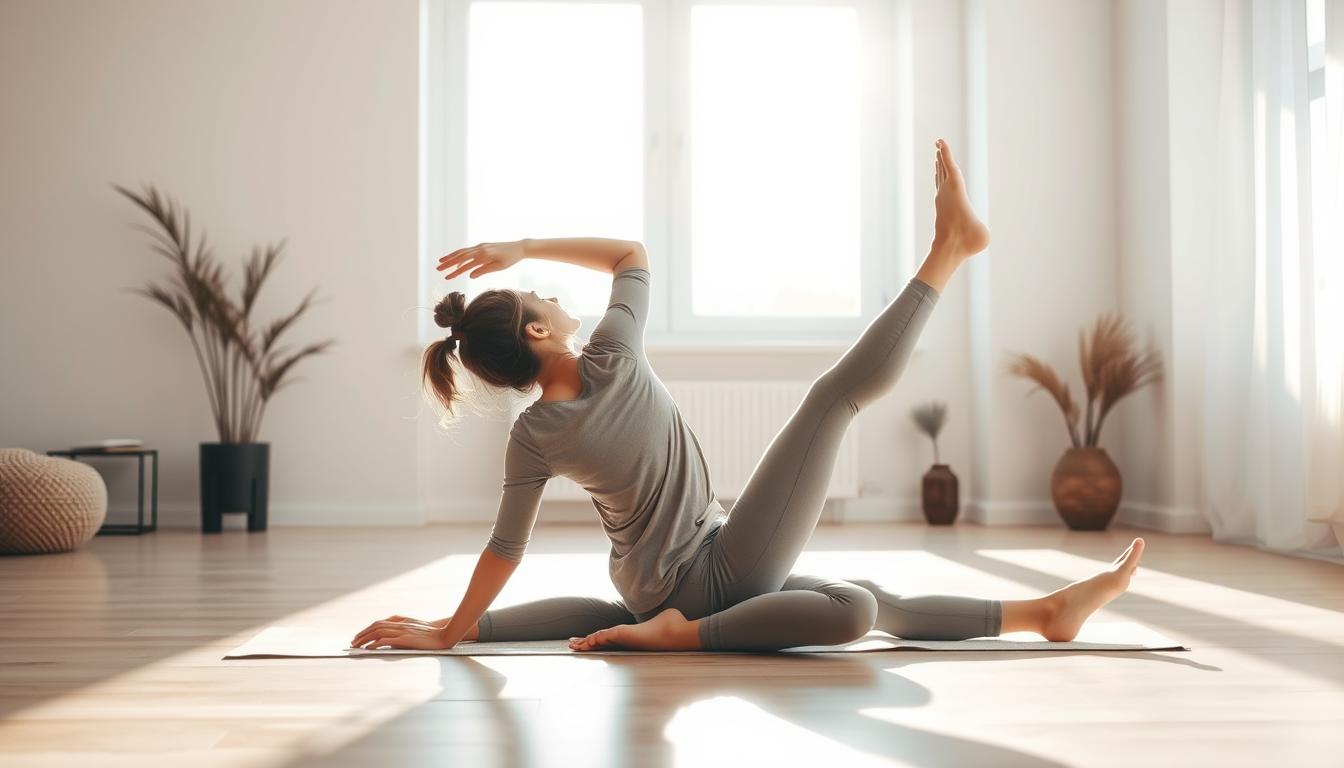
Stretching without equipment can make you more flexible. No-mat stretching helps loosen tight muscles from sitting or working out. You can do simple stretches anywhere, like in offices, homes, or waiting in line.
Experts like the American Physical Therapy Association say stretching daily is good for your joints. A 5-minute routine is easy to fit into your day. Try standing forward folds or dynamic moves. These easy stretches improve your posture and circulation, showing you don’t need special gear.
Start with small stretches and listen to your body. Build a routine that fits your lifestyle. This way, you can enjoy the benefits of stretching anywhere, anytime.
Why Stretching is Important for Everyone
Stretching isn’t just for athletes—it’s good for everyone. It boosts body flexibility, making joints move better and feel less stiff. Long hours sitting can make muscles tight, but stretching daily can help.
A 2021 study found that static stretching increases joint range of motion. It also helps prevent injuries by getting muscles ready for activity. Stretching after workouts reduces soreness by improving blood flow. Tight muscles are more likely to get hurt, like when typing or lifting.
Regular stretching strengthens weak spots, like the lower back or hips, to avoid pain.
Stretching also helps with stress. It calms the body by activating the parasympathetic nervous system. Some studies show it can even help with menstrual pain, releasing endorphins that are stronger than morphine. Even short stretches can improve focus and mental clarity, helping with daily stress.
Creating a daily stretching routine is easy and supports your health. Focus on key areas like the neck, shoulders, and hips. Aim for 2-3 times a week to see improvements. Make stretching for health a priority for a stronger, more agile body. Start with just 10 minutes a day to feel the difference.
Easy Stretching Habits for the Office
Even in tight spaces, office stretching routines can transform your workday. Start with simple desk stretches like neck rolls or shoulder blade squeezes. Lean back in your chair, drop your right ear toward your right shoulder, and hold for 10–30 seconds. Repeat on the left. These moves target stiff muscles without leaving your workspace.

Take a 60-second break every hour to stand and stretch. Try the “doorway chest opener”: place forearms on a doorframe, step forward to feel a gentle stretch across your chest. This improves workplace flexibility and eases hunched posture from computer use. For wrists, rotate them in circles or press palms into the desk to counteract typing strain.
Research shows even small efforts matter. The CDC recommends moving every hour to combat sitting’s risks. Try calf raises at your desk—rise up onto toes 10 times—to boost circulation. Pair these with 2-minute shoulder rolls during conference calls. These habits are discreet yet impactful. Hinge Health reports users saw a 68% pain reduction after adopting such routines.
Incorporate stretching at work into your workflow. Set a timer for 10:00 AM, 12:00 PM, and 3:00 PM for quick stretches. Use your chair as a prop: sit on the edge, plant feet flat, and hinge forward to touch toes (even slightly) for a gentle back release. Every movement adds up—your body will thank you!
Simple Stretches You Can Do at Home
Home stretching routines are a great way to stay flexible without stress. You don’t need any special equipment. Just use your space and a few things you have at home.
Try using a doorway to stretch your chest. Lean forward until you feel a stretch. Hold for 15-30 seconds and breathe deeply.
Chairs and walls are your stretch tools. Sit on a chair’s edge to stretch your hamstrings. Or stand by a wall to stretch your calves by pressing your heels down and leaning in.
These stretches target tight areas like hips, necks, and backs. They get tight from sitting too much. Even a 5-minute stretch while waiting for coffee can help.
Make sure to stretch all major muscle groups. Try the child’s pose for your lower back or a seated spinal twist for your core. Hold each stretch for 15 to 30 seconds to see benefits. Older adults might want to hold for 45 seconds for more benefits.
Stretching at home improves your flexibility and mobility. It helps with everyday tasks like bending or reaching. It’s a simple habit that reduces stiffness and supports better posture.
Remember, listen to your body. If a stretch hurts, stop. Small, regular stretches lead to big improvements over time.
Quick Stretches You Can Do on Public Transport
Commuter stretches don’t need extra space. You can stretch discreetly on public transport to keep muscles loose. When sitting, roll your neck side to side or tap your toes to the ground for ankle circles.
Shoulder shrugs and wrist rotations can be done anywhere, even in crowded trains. These public transport exercises improve circulation and ease stiffness.

“Even small movements during travel help your body stay balanced,” says Jill Miller, movement expert and creator of SMART Stretching programs.
Standing? Hold a pole and shift weight into a lunge to stretch your calves. Rotate your torso slowly to open your back. Jill’s methods, taught at Equinox and 24 Hour Fitness, prioritize safety.
Stretching while traveling also reduces DVT risks—on trips over four hours. Combine these moves with sips of water; coconut water hydrates better than coffee.
Stay aware of your surroundings. Move slowly and hold stretches for 10-15 seconds. Discreet stretching keeps you energized and comfortable. Small efforts add up—your body will feel the difference.
Stretching in Your Car
Driving long hours can make hips, shoulders, and backs tight. Take car stretches during driving breaks to stay loose. Always park safely before stretching—never stretch while moving.
Even a 5-minute pause at a rest stop can help. Try twisting gently to ease stiffness. Shoulder rolls or side bends while seated can also boost road trip flexibility.
For stretching while driving, use traffic stops. When halted at a light, reach hands toward the ceiling then down to stretch your spine. Try the “seated forward fold”: unbuckle, hinge forward over your seat, and hold 20 seconds.
This eases lower back tension. The 15-second cat-cow motion—arching and rounding your back—also works in tight spaces.
Follow the 80/20 rule: 20% of your time spent on 4 key moves makes 80% of the difference. The 30-second hip stretch (crossing one ankle on the opposite knee) relieves tightness from sitting. Use massage balls under your seat to ease sore spots during stops.
Apps like DownDog offer quick guided sessions for parked breaks.
Take a driving break every 2 hours. Even 5 minutes of moving boosts circulation and focus. Pair stretches with hydration breaks—your body and mind will thank you. Small efforts add up to big gains in comfort and safety on the road.
Outdoor Stretching Options
Make your local park a natural gym with outdoor stretching routines. Use a bench for nature stretches, like leaning forward to stretch your hamstrings. Walking paths are perfect for walking and stretching breaks. Try calf stretches on inclines or side lunges between trees.
“Dynamic stretches prep muscles before activity, while static stretches aid post-workout recovery,” notes a 2021 Sports Health study. Pair this science with fresh air for a mental boost.

Park exercises like the “bench-assisted” chest opener or wall-supported side bends use the surroundings to improve flexibility. On a hike, stretch your quadriceps using a sturdy tree trunk. Or, do a squat on a forest trail to open your hips.
A 2016 study in Physiotherapy: Theory and Practice found these movements improve range of motion with mindful breathing.
Combine 20 minutes of park exercises with a walk to cut stress hormones. Cold weather? Use steps for calf raises. Summer heat? Try seated forward bends under shade trees.
Even a 30-second triceps stretch while waiting at a bus stop counts. Nature turns every outing into a wellness boost.
With 621 million runners worldwide, outdoor routines are booming. Add stretches to your jog or bike ride. Pause mid-walk for a pigeon pose on a park bench, or balance on a curb to strengthen ankles.
The key? Move mindfully, breathe deeply, and let surroundings inspire your next stretch.
Stretching in Between Daily Tasks
Micro-stretching makes every moment a chance to stay flexible. You don’t need to stop what you’re doing. Just add 30-second stretches to your daily activities. Lift your heels while waiting for coffee to stretch your calves.
Try shoulder rolls during TV commercials to loosen up. These small stretches add up, improving your flexibility without taking up too much time.
Desk breaks are important. Use computer loading screens for a 1-minute Cat-Cow stretch. Studies show micro-stretching can reduce work pain by 72%.
Stand while on hold to stretch your back. Even waiting for toast? Do a forward fold to stretch your spine.
Link stretches with your daily habits. Stretch your calves while brushing your teeth. Side bends while heating lunch can improve your posture and energy, Harvard says.
A 10-second quad stretch while tying your shoes counts too. The goal is to be consistent, not perfect.
Every commute or meeting break is a chance to stretch. Stretch your hamstrings while waiting for downloads. Use commercial breaks to stretch your arms overhead. Small habits can lead to big changes in your body.
Creating Your Own Stretching Routine
Start building a personalized stretching plan that fits your life. First, notice which muscles feel tight—like shoulders after typing or hips from sitting. Pick stretches targeting those areas. A flexibility routine can be as short as 5 minutes.
Try a 5-minute morning stretching program with neck rolls and side bends. Or a 15-minute post-work session focusing on hamstrings and lower back.

Begin with 2-3 stretches daily, holding each for 20-30 seconds. Over time, add new moves or extend holds. The American College of Sports Medicine recommends practicing 2-3 times weekly.
But daily micro-routines (even 2 minutes at your desk) help too. Track progress in a notebook or app—note which stretches feel best. Adjust your custom flexibility plan every 4 weeks.
For example, a 10-minute evening routine might include cat-cow stretches and child’s pose to relax. A morning stretching program could focus on arm raises and calf stretches to energize. Mix static and dynamic moves based on your goals—dynamic stretches before activity, static holds for deep release.
Consistency matters more than perfection. If a move hurts, skip it. Your body changes, so your routine should too. Small, regular efforts build lasting flexibility. Start simple, then grow your practice over weeks. Your body will thank you!
Listening to Your Body: When to Stretch
Knowing your body is essential for safe stretching. Notice if your muscles are tight or in pain. Stretching timing is important too. Morning stretches help with stiffness, while evening routines relax you.
Before exercising, do dynamic stretches. After, hold stretches for 30 seconds. This helps your muscles recover.
Begin with gentle stretching intensity. Holding stretches for 30 seconds can improve flexibility by 10–30% in six weeks. If you feel sore, shorten the hold to 10–15 seconds.
Avoid stretching too far, as it can cause injury. The American Chiropractic Association says stretching can reduce tension headaches by 50% for people who sit a lot.
Know your limits when stretching. If a stretch hurts, stop. Overstretching can damage muscles or tendons. For tight areas, like hamstrings, try 60-second holds but stay comfortable.
Regular stretching is better than intense stretching. Experts recommend 2–3 sessions a week or 5–10 minutes daily. If you’re injured or have chronic pain, get professional advice. Listen to your body for the best stretching timing and intensity. Focus on comfort over pushing too hard.
Staying Motivated with Stretching
Starting a stretching habit is all about small, consistent steps. Set flexibility goals that fit into your daily life. Use a journal or take photos to track your progress over time.
Make stretching enjoyable by doing it while you listen to podcasts or watch shows. A 2021 study in Peer J showed that better mobility can reduce injury risk by six times. Even just 5 minutes a day can help protect your body.
When you feel unmotivated, remember: every stretch matters. Consistent stretching improves blood flow by 30%, reduces muscle tension, and enhances focus. Begin with two stretching sessions a week and gradually increase the time.
Use phone reminders or link stretches to daily activities like waiting for coffee. The National Institutes of Health say that mobility routines help keep us independent as we age. So, every small effort now will benefit you later.
Miss a day? Just get back to it. Progress isn’t about being perfect. Celebrate small victories, like stretching a little deeper each week. Share your journey with a friend to stay motivated.
Over time, these stretching motivation tips will turn effort into habit. Your body will adapt, making movements feel easier and stress less. Keep it simple and regular, and your body will thank you with more energy and resilience.