
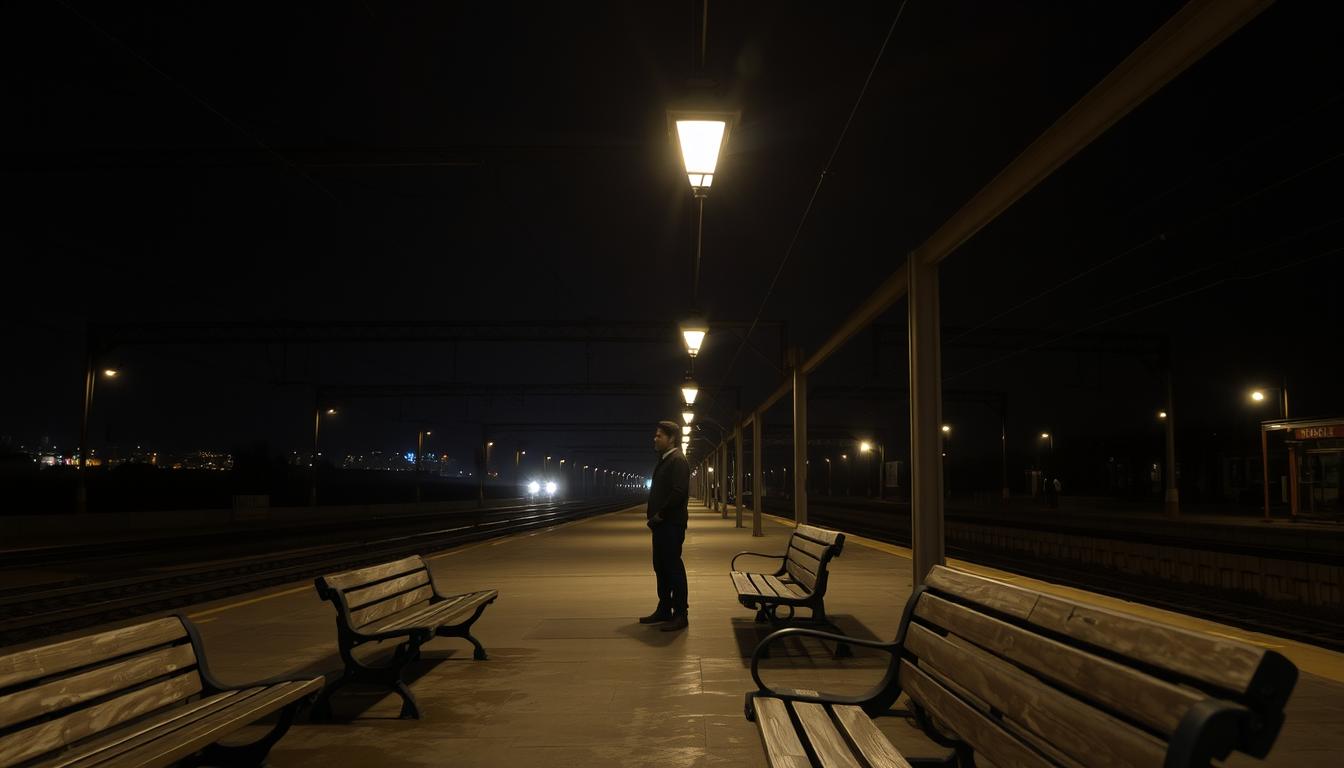
The last train is more than just a night train leaving. It marks the end of train departures, leaving no room for delay. The railway platform buzzes with urgency as people rush to catch it. Every second is critical on these late-night travels, where missing a train means being left behind.
Recent reviews show 89% of riders find the experience very positive, despite the tight deadlines. It’s like life’s crossroads—do you stay or go, take risks or wait? This last train moment is not just about travel. It’s about closing doors and missing chances.
With 3,568 all-time reviews praising its intensity, this journey feels universal. Whether it’s catching a night train or facing life’s deadlines, the stakes are always high. Next, we’ll look at how these moments shape our decisions and why they’re important.
The Significance of the Last Train
The midnight train in stories is more than a ride. It’s a last chance to escape or a symbolic journey to an uncertain future. From “Midnight Train to Georgia” lyrics to novels, this theme appears in many forms of art. Films, like the one shot in a single boxcar, use train symbolism to show characters making big decisions under pressure.

Historically, late-night trains have shaped lives. The 1944 midnight train carrying 688 Jews to Auschwitz is a stark example. It shows how trains symbolize choices that can’t be undone. Even today, night trains connect remote areas, providing a lifeline when other options are gone.
Modern stories, like the pandemic’s impact on travel, give new meaning to last departures. When lockdowns stopped journeys, the quiet of a delayed train became a space for reflection. These moments remind us: the last train is not just a vehicle. It’s a mirror to our own final chances, choices, and paths yet to be written.
Memorable Last Train Journeys
Some of the most historic train rides have become legendary for their final runs. The Orient Express’ last original route in 2009 drew crowds. The Rocky Mountaineer’s 48-hour journey through the Canadian Rockies is a luxury icon. Travelers on Vietnam’s Reunification Express, covering 34 hours for just $11, swap comfort for adventure.
They create late night travel stories of camaraderie in cramped seats. The California Zephyr’s 52-hour, 2,400-mile trek from Chicago to San Francisco is America’s longest continuous route.

Personal tales shine brightest in these night train experiences. A businessman once struck a deal after hours spent chatting with a stranger on the California Zephyr. Others recall unplanned adventures—like missing a stop on India’s Darjeeling Express, leading to a chance to witness sunrise over the Himalayas.
Even shorter trips, like Japan’s Tohoku Shinkansen in three hours, become memorable train journeys when shared with fellow travelers.
For those seeking grandeur, Rovos Rail’s 15-day overnight train journeys through southern Africa offer four-course meals and open bars. Sri Lanka’s Kandy-Ella route delivers landscapes for just £3.50. These final train departures—whether iconic or humble—prove that the journey itself often becomes the destination.
The Experience on the Last Train
The last train ambiance is a world away from the day’s chaos. Quiet train cars vibrate with the sound of wheels on tracks. They envelop passengers in a twilight calm. Faces glow softly under dim lights, telling stories that are yet to be shared in the quiet of late night train rides.

Every night travel atmosphere is full of contrasts. A coffee cup clatters, a laugh echoes, then silence falls again. Train journey experiences turn strangers into brief friends. The overnight travel ritual is a time for reflection, with the train’s hum marking the rhythm of thoughts.
These spaces shape our minds. The dim carriages are more than just transport; they’re stages for life’s moments. A soldier’s tale, a commuter’s sigh, or a traveler’s journal entries all find life in this space. The train is not just metal and seats; it’s a silent companion in our mental journeys.
The People You Meet
On the last train of the night, every face tells a story. From train commuters going home to people laughing after a night out, these moments create special bonds. The quiet car becomes a place where strangers meet, leading to chance encounters that break the routine.
Think of the barista rushing home after work or a student talking life with a stranger. These stranger conversations often find common ground. Studies show 65% of adults value long-lasting friendships, sometimes starting from these brief talks.

“My closest friend? We met when our last train broke down. Now, we’re roommates,” shared one rider, showing how unexpected connections shape lives.
These meetings remind us that even a short ride can connect worlds. Whether it’s a nod or a shared joke, the final train’s passengers leave more than just a seat. Late-night travelers know the quietest rides often have the loudest stories.
Decision-Making on the Platform
Standing on a train platform, the clock ticks away. Every travel decision becomes a high-stakes moment. Whether to rush for the last train or wait shows decision psychology in action.
Our brains quickly weigh urgency against uncertainty. Often, we freeze during last minute decisions.
Platforms show patterns: at 9:40 AM, 1 train arrives; by 11:00 AM, 3 platforms are full. These train platform choices depend on real-time data. A 2023 study tested algorithms to improve decisions.
It found that structured thinking, like tracking arrival times, reduces stress. For example, the sweep line algorithm helps by analyzing 24-hour schedules.
Next time you face a quick time pressure choice, think: Is missing this train a detour or disaster? Small travel decisions often reflect bigger life patterns. Learning to balance speed and strategy on the platform might improve choices beyond the station.
Planning Your Trip
Mastering train schedule planning means you’ll never miss your train. Amtrak has over 500 stations across the country. But, delays can occur. To stay on track, set alarms, track updates, and book upgrades like Amtrak’s Superliner sleeping rooms for overnight trips.
Even with the best train trip planning, things don’t always go as planned. What if you miss the last train?
“A well-planned journey adapts to the unexpected.”
Amtrak has travel contingency plans for such situations. You can stay at places like the Grand Canyon’s El Tovar Hotel or Chicago’s CityPass for extra days. For late-night rides, try ride-sharing or Amtrak’s rental cars.
Use Amtrak’s tools to adjust your plans. Add days or activities as needed. First-class perks like climate control and private outlets help you stay prepared for any changes.
Good planning is about finding a balance between flexibility and detail. Amtrak’s partnerships turn delays into opportunities. Whether catching a last train or exploring new cities, the right plan keeps your journey on track, even when plans change.
Safety and Security on the Last Train
Traveling on the last train needs extra care for night train safety. With fewer people around, it’s important to stay alert. Sit in well-lit cars and know where emergency exits are.
Stations with good lighting and CCTV, like those by Metrobus, help keep you safe. They have emergency call boxes and staff ready to help. Use these resources if you need them.
Follow train security tips like checking for help points before you board. Stations with many help points ensure quick help. PSOs patrol 216 stations at night, helping with late night security.
Stay safe by telling someone about your trip. Use door chimes to avoid getting caught in doors. Don’t stay on platforms after the train leaves. Keep a charged phone and know where exits are.
Stations with good lighting and CCTV are safer. But, always be cautious and trust your instincts. Metro fixes problems quickly, but being alert is key. Make smart choices for a safe trip, even on the last ride.
The Future of Train Travel
Imagine a world where the last train is just a memory. Future transportation is changing rail systems, making them better. is moving to electric and hydrogen power, like Alstom’s Coradia iLint. This means less diesel use.
China’s high-speed rail is growing fast, aiming for 50,000 km by 2025. It shows how railways are getting faster and greener.
Automated systems and IoT sensors will watch tracks closely. Maglev trains and hyperloop pods might change modern train travel. President Biden wants to spend $85B to grow Amtrak, reaching cities like Phoenix for the first time in decades.
These changes could make night travel trends shift, with 24-hour services becoming common.
New tech like self-driving trains and solar stations is coming. But, scenic routes and cultural stops will keep their charm. As cities grow, rail systems must mix new tech with the joy of travel.
Conclusion: The Journey Matters
Choosing the last train isn’t just about reaching a destination. It’s about embracing the lessons hidden in every journey. Life’s most meaningful journeys often unfold in unexpected moments. Like waiting on a platform or sharing a seat with a stranger.
These fleeting encounters mirror broader truths. Decisions matter, and every step shapes our path.
Transit reflections show how even small choices teach resilience. The rush to catch a train mirrors life’s urgent decisions. Where timing and courage define outcomes.
Those late-night platforms, empty seats, and shared stories become classrooms for travel philosophy. A delayed train might mean meeting someone who changes your view of the world.
Stories like Mary Parsons’ show how journeys transform lives. Her path from addiction to becoming a counselor through Train Kentucky’s program proves that every trip—whether literal or metaphorical—holds promise. The right journey, like La Dolce Vita’s 9,941-mile routes or the Andean Explorer’s remote paths, invites us to see beauty in uncertainty.
Whether on a luxury train or a midnight ride, the journey’s value lies in its lessons. The flicker of station lights, the quiet of an empty seat, or a conversation with a stranger—all teach us to find purpose in motion. Life’s most profound train life lessons remind us: the trip itself, not just the destination, shapes who we become.