
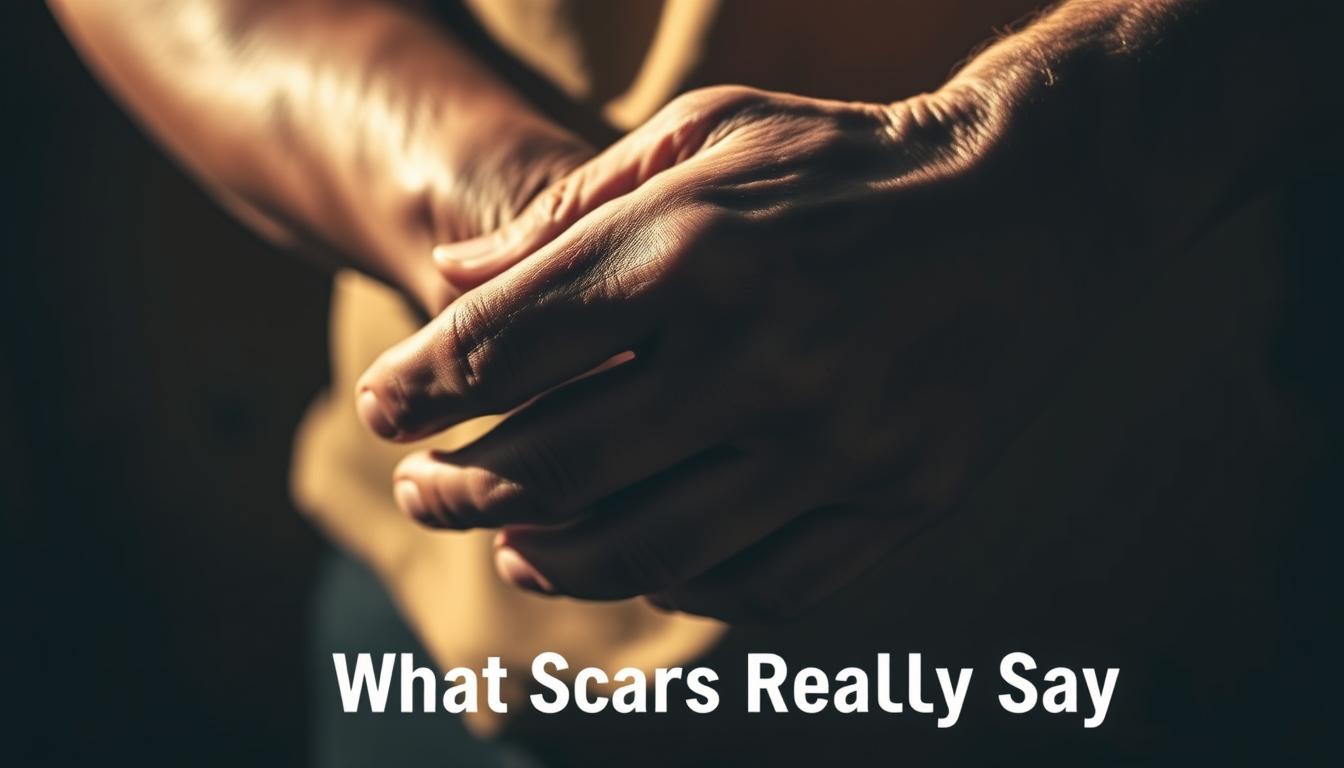
Scars are more than just marks on the skin—they tell our stories of pain and strength. They can come from a childhood scrape or a major surgery. Each scar shares a tale of survival.
Take the four-inch line on someone’s head, a sign of brain surgery eleven years ago. It’s not a flaw but a symbol of perseverance. Just like Jesus’s wounds after his resurrection, which became symbols of hope.
Scars remind us that healing and strength often come after hardship. They are a reminder of our ability to overcome.
Every scar has its own story. For 1 in 5 Americans with autoimmune diseases like Lupus, scars are a sign of courage. They show that we can endure.
Scars are not just about pain; they are about the strength we find in overcoming it. This article explores how scars transform pain into purpose. They connect us all through our shared experiences of resilience.
Let’s discover what scars really say about our strength and resilience.
Understanding the Nature of Scars
Scars are more than just marks on the body; they are symbols of resilience, strength, and survival.
Scars form when the skin heals after an injury. During this time, scar tissue made of collagen fibers builds up. This creates a new layer of skin, leaving marks on the surface.

There are many types of scars. Keloid scars grow bigger than the original wound and are more common in darker skin. Hypertrophic scars stay within the injury area but can be raised. Contracture scars pull the skin tight, while atrophic scars make the skin sink in.
Genetics and how well the wound is cared for affect physical scars. Keloids can show up months after an injury, while hypertrophic scars appear within weeks. Where the injury is also important, as joints or the chest are more likely to get keloids.
Scar tissue is different from regular skin because of its collagen structure. This is why some scars can feel stiff or itchy. Knowing how scars form helps us understand why different treatments are needed. Even small cuts can leave lasting scars, but each scar has its own story of healing.
The Emotional Impact of Scars
Scars are more than just physical marks; they leave emotional scars that change how we see ourselves. The psychological impact of scars can last long after the wound heals. It affects our self-image and scars.
Many people feel anxious about visible marks, as society often expects us to hide them. Studies show that people under 50, and women in particular, face higher risks of anxiety and depression because of scarring.

Even small scars can affect our body image, which is important in jobs or relationships where we need to be seen. Veterans with visible injuries often struggle with depression and post-traumatic stress. Scars on the face or limbs can make people avoid social events or use makeup to hide them.
But there are ways to cope. Makeup can help boost confidence, and therapies like cognitive behavioral therapy (CBT) can help rebuild scar confidence.
Healing is not just about the body; it’s also about the mind. Accepting scars as part of our story can change how we see them. Recovery is a journey, and sharing our experiences can give us strength. Small steps, like using silicone gels or joining support groups, can help us accept our scars over time. The goal is not to erase them but to find a new meaning in our lives.
Cultural Perspectives on Scars
Scars hold different meanings in various cultures. In many African and Indigenous societies, scars are seen as symbols of bravery and status. For the Nuba people of Sudan, scars are a sign of maturity and identity.
In contrast, Western cultures often view scars as imperfections. This difference highlights the diverse views on scars worldwide.

Today, media shows this contrast. Campaigns like Bio-Oil’s #LoveYourMarks promote accepting scars. Yet, platforms like Instagram face criticism for banning healed self-harm scars.
This mirrors the past, where scars were seen as divine proof in medieval Europe. Yet, women’s scars were often seen as impure. Today, 72% of people with scars say it lowers their confidence, according to the British Skin Foundation.
“Scarred bodies tell stories older than language,” says historian Dr. Lila Torres. “They’re either celebrated as badges of honor or hidden as flaws.”
Scars have cultural significance, from West African lip plates to Japanese kigurumi tattoos. As body positivity grows, brands like GHD highlight mastectomy survivors. This challenges traditional beauty standards.
Yet, debates continue. For example, Project Tsukurou received over 6,000 requests for scar concealment. This shows how scars are deeply connected to identity and culture.
Common Myths About Scars
Many people believe scar myths that can harm care. For instance, using vitamin E or Mederma gel is often suggested. Yet, studies show they don’t work better than petroleum jelly.
On the other hand, silicone sheets might help in some cases, but results are not the same for everyone. Sunlight isn’t a solution—it can make scars darker. So, it’s important to protect your skin to avoid scar prevention myths.

Some scar misconceptions say scars fade quickly. But, they actually take 12–18 months to fully mature. Emotional healing times also vary, and society often pressures people to “get over” their scars too fast.
Proper care, like moisturizing and using alcohol-free cleaners, can help. Scar revision can make scars look better, but it won’t completely remove them. Understanding scar treatment facts means being patient and using science-backed methods.
Seeing a dermatologist is key to ensure your care is based on evidence. This helps with making informed decisions about treatment and legal actions. Knowing the truth helps separate hope from reality.
Scar Care and Treatment Options
“A scar means that what was once a painful wound has now closed. It shows that the body and mind are capable of incredible healing.”
Scar treatment options vary widely, but consistency in a scar care routine is key. Silicone gel sheets, proven effective for 40 years, soften scars when used daily. Pairing them with SPF 30+ sunscreen shields new scars from UV damage.
For raised scars, corticosteroid injections can shrink size by 50%. Cryotherapy uses cold therapy to target tissue.
Scar reduction methods like laser treatments fade redness and texture, though results depend on expertise. Pressure therapy with polyurethane dressings, worn for six weeks post-surgery, helps prevent raised scars. For camouflage, brands like Dermablend or SmartCover offer cosmetics to match skin tones.
Medical options like surgical revision or radiation exist but come with risks. Always consult a dermatologist to tailor a scar healing products regimen. Remember, scars take 12–18 months to mature—patience and consistency in scar management yield the best outcomes.
Scars and Identity
Scars and identity are closely linked for many. Our personal stories shape how we see ourselves, and scars can symbolize resilience. Annie’s spinal fusion scar, from a scoliosis battle at 12, now symbolizes her strength.
Research finds 70% of those with self-harm scars see them as part of who they are. Chiara, a breast cancer survivor, chose to have her breasts removed despite her cancer. She sees her scars as a sign of survival.
Devin-Norelle’s top surgery scars changed how others saw their gender identity. This shows scars and personality grow together.
A documentary on body image helped reduce stigma. It changed views on scars for 36% of older and 55% of younger viewers. “My scars aren’t flaws—they’re proof I endured,” said one.
Research shows 80% of survivors see scars as reminders of growth, not just pain. Even 20% of those with severe burns, like Charlbi, find their scars make them more authentic.
Self-acceptance begins with seeing scars as signs of courage. “These lines tell my story,” said a UK study participant. Sharing scar stories challenges societal norms. A surgeon noted, “Scars are living proof of healing in progress.”
“My scars are my battle scars. They’re not something to hide—they’re part of who I am.”
Data shows 86% of adults and 54% of younger people have visible scars. Yet, many feel pressure to hide them. But embracing scars as part of our journey helps us accept ourselves. Each scar tells a story of survival, strength, and unique identity.
Moving Beyond Physical Scars
Emotional healing starts when we see scars as more than just marks on the skin. When people change their stories, they find strength in their ability to bounce back. Healing from scars means facing both the visible marks and the hidden emotional pain.
Therapies like EMDR and CBT help change how we think about trauma. They help us move past the physical scars and deal with how trauma affects our thoughts.
Scar emotional recovery is like a journey where never giving up is key. Just like physical therapy breaks down scar tissue, mental work can challenge our fears. Somatic therapy connects our mind and body, helping us release tension stored in our muscles.
Even small steps, like naming the emotions tied to scars, help us make progress. The author experienced this after surgeries, like a 2022 prostatectomy.
“Scars are not just marks on the body—they’re maps of resilience.”
Research shows 70% of people believe talking openly about differences helps understanding. But 20% shy away from discussing visible scars because it makes them uncomfortable. The author’s scars, from childhood scrapes to surgical marks, tell a story of healing.
Scars like the “fierce” purple prostatectomy scar or acne’s “lunar” patterns symbolize survival, not shame. Recovery isn’t always straightforward. But 90% of those with visible differences want honest conversations, not silence.
Embracing this mindset turns scars into proof of endurance. Whether through advocacy or personal growth, moving beyond physical scars means honoring pain while choosing to grow.
Inspiring Stories of Scar Survivors
Scar survivor stories show how scars become symbols of strength. Raiché Mederick, Tatyana, and India Gale all survived severe burns as kids. Now, they share their stories to empower others.
Raiché, who had 70% burns at 18 months, became a Black History Month ambassador. She advocates for diversity in scar advocacy. “My scar journey taught me courage isn’t about hiding—it’s about owning your story,” she says.
These people show that scar empowerment starts with self-acceptance. Dr. Hemani Modasia-Shah, a burn survivor and doctor, says, “Beauty is a state of mind.” Her work combines medicine and advocacy, helping others see their scars in a new light.
The Phoenix Society’s interviews with five burn survivors talk about resilience, community support, and redefining beauty.
“Share Your Story: Talking about your scars can inspire others. It’s a way of saying, ‘I’ve been through this, and I made it out stronger.”
Scar advocacy groups like the Phoenix Society and Scar Free Foundation use these stories to address inequities. Research shows darker skin tones face higher keloid risks. Yet, survivor networks like the Phoenix World Burn Congress offer tools to navigate these challenges.
Stories like India Gale’s—now a public speaker—show how sharing struggles turns pain into purpose.
These voices remind us scars are part of life’s mosaic. Each survivor’s path shows healing isn’t about erasing marks but embracing them as proof of survival. Their journeys inspire others to see scars not as flaws but as testaments to resilience.
The Future of Scar Treatment
Scars show us that even in the darkest times, healing is possible. New future scar treatments blend science and hope. Breakthroughs like regenerative medicine for scars use lab-grown skin and bioengineered gels. Stanford’s research shows blocking TGF-β might stop keloids, while advanced scar therapy options like silicone gels and drug-loaded dressings improve outcomes. These scar innovation methods aim to help millions—over 80 million Americans get surgical scars yearly. Yet, even with scar technology, scars remain symbols of resilience. Whether minimized by science or worn proudly, they remind us that healing isn’t just physical—it’s a story of strength. The road ahead blends progress with respect for the narratives etched into our skin.