
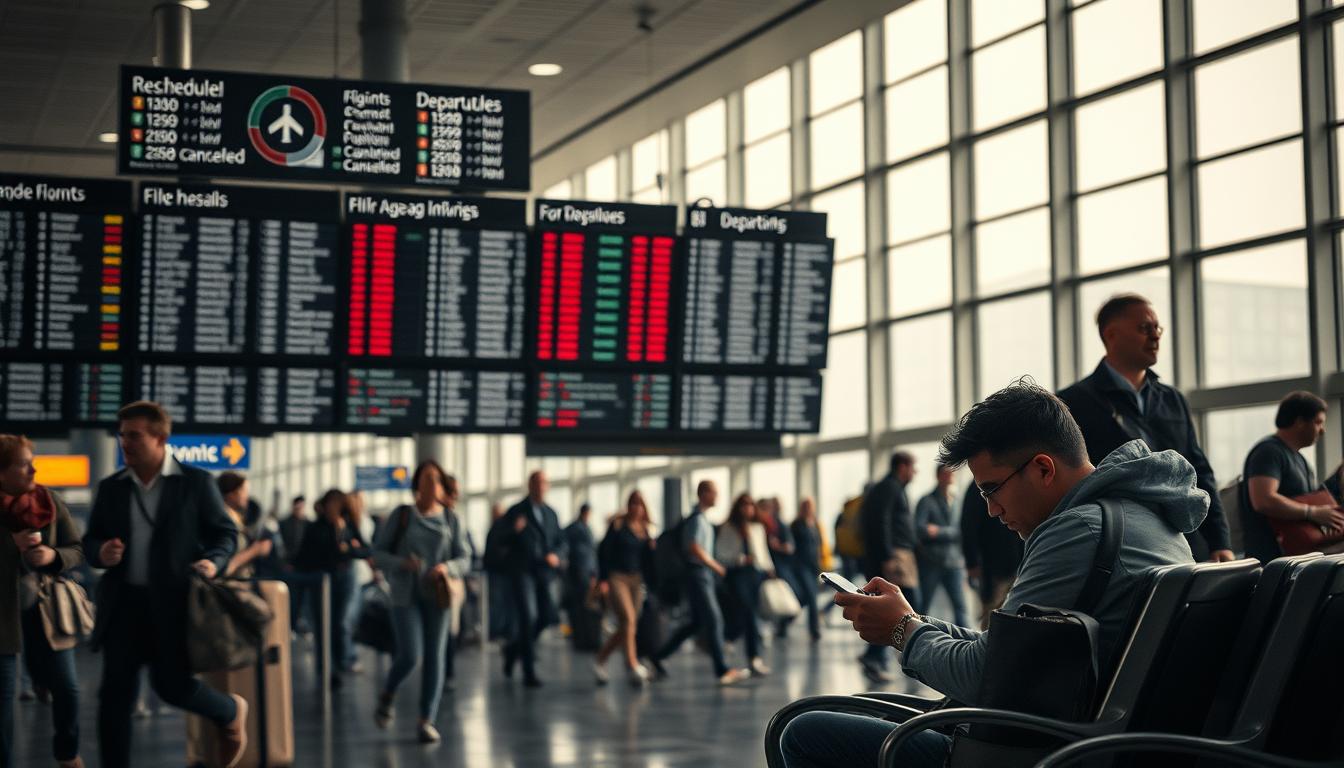
Missing a flight can seem like a disaster, but knowing how to handle it can make a big difference. Over 30% of missed connections happen just before the flight leaves. So, acting fast is very important.
Many people don’t know they can ask for meal or hotel vouchers. Those who do often save $150–$200. Airlines like JetBlue and Southwest offer flexible options for those who arrive just in time.
Programs like Delta’s or American’s frequent flyer tiers can also help. Taking proactive steps, like telling the airline before you leave or using the “flat tire rule” in emergencies, can also save money. This guide will help you deal with unexpected travel changes confidently.
Even in busy times, tools like airline apps or credit card travel insurance can help. JetBlue’s policy lets you rebook without paying fare differences. Southwest doesn’t charge change fees but might ask for fare gaps. Knowing these details can make things easier.
Whether it’s a last-minute delay or a planned change, this article shows how to adapt. Even missed flights don’t have to ruin your trip.
What Happens When You Miss Your Flight?
If you miss your flight, airlines have strict missed flight procedures that differ by airline. Your seat might be given to someone else within an hour. Checked bags could also be taken off the plane.
Airlines usually mark you as a “no show.” This can cancel your remaining travel plans. For instance, missing a connecting flight because of a delayed first flight might mean you have to pay for rebooking.
Act quickly: Call your airline right away using their official number. Have your booking number and ID ready. Most no-show policies require you to ask for flight rebooking before the next flight leaves.
Southwest lets you try to get on the next flight if you arrive within two hours. Delta looks at each case differently. American Airlines might give you a free rebook if you had an unavoidable delay, like traffic.
Baggage delays can happen if your luggage was already on the plane. Airlines like Delta or United might keep bags on missed flights. You’ll need to claim them at the airport.
If the airline caused the missed flight—like overbooking or bad weather—they might offer free rebooking or vouchers. But, basic economy tickets usually don’t have these benefits. Always check your ticket’s rules before getting worried.
Understanding Airline Policies on Missed Flights
Airline policies on missed flights vary a lot. It’s important to know your rights. Many airlines have strict rules if you miss a flight without telling them.
Basic economy tickets have stricter rules. But, refundable or business class fares offer more flexibility. Always check the ticket agreement terms before booking to avoid surprises.

Some airlines have the flat tire rule. This rule might waive fees for delays like traffic jams or medical emergencies. But, you might need to show proof, like a doctor’s note.
No-show policies can be tough if you miss flights often. Missing flights too many times might cost you extra or limit your future bookings. If you’re sick or in an emergency, act fast. Many airlines let you rebook within 24 hours at full cost.
Always ask politely, “Can I rebook this flight under the flat tire rule?” to get help.
Remember, 20% of U.S. flights are delayed over 15 minutes. So, plan extra time. Check your ticket’s terms online and keep all your documents. Airlines like Delta or JetBlue explain their policies online. Visit their websites before you travel.
Common Reasons for Missing a Flight
Missing a flight can make your trip stressful. Many travelers forget simple steps that lead to last-minute trouble. Common reasons for missing flights include traffic jams and airport mix-ups.
Delays can start before you even get to the terminal. Airport transportation problems like accidents or road closures can hold you back. A study found 30% of travelers don’t plan enough time to get to the airport, leading to missed flights.
Long lines are another hurdle. Security line delays cause 25% of missed flights, more so during busy times. Families and first-time flyers often underestimate how long TSA screening takes, adding to the stress.
Check-in issues also cause problems. Over 20% of travelers forget their passports or boarding passes. Others miss the deadline for online check-in. Navigating the terminal can also lead to mistakes, with 17% of missed flights due to confusion over AM/PM times or terminal numbers.
Technology can fail too. Relying only on GPS or airline apps can lead to disaster if they malfunction. Over 15% of missed flights are due to tech failures, from dead phones to misread emails. Simple mistakes like oversleeping or packing too late also cause 18% of no-shows.
Bad weather adds to these risks. Snowstorms, hurricanes, or fog can ground planes and block roads. Even on sunny days, traffic jams or parking lot confusion can cause problems.
How to Avoid Missing Your Flight
Smart travel starts with knowing when to arrive at the airport. For domestic flights, get there two hours early. For international trips, plan for three hours to handle security and check-in.
Flight tracking apps like FlightAware or Google Flights send alerts for delays or gate changes. These apps help you adjust your plans fast.
Pack two days before your trip. Get passports, tickets, and essentials ready early to avoid stress. Check baggage limits online to avoid delays at the curb. Use airport parking services to save time finding your car later.

Choose reliable transport to the airport. Book taxis or rideshare in advance for busy times like Thanksgiving or Christmas. If driving, check your vehicle a few days before to avoid breakdowns.
Always arrive 30 minutes before boarding starts. Airlines start boarding 30 minutes before departure. Try to get settled in your seat by the 10-minute rule—boarding ends 10 minutes before takeoff. For connecting flights, choose routes with 45+ minute layovers to avoid tight connections.
Know airline policies on bags and security. Many charge extra for late check-ins, which close 30 minutes before departure. A checklist for documents, tickets, and deadlines helps you enjoy pre-flight time without rushing.
The Emotional Impact of a Missed Flight
A missed flight can make you feel panicked, embarrassed, or guilty. Antonis Mavropoulos, the only passenger who missed the Ethiopian Airlines Flight ET302 crash, is a great example. He arrived late and avoided disaster. This shows that sometimes, missing a flight can save you from bad situations.
But, the first reaction is usually anxiety. This can make you feel overwhelmed.
First, accept your feelings without judging yourself. Stress hormones like cortisol can make it hard to think clearly. Try deep breathing or taking a break to calm down.
Talking about your feelings with someone can also help. It’s better to share openly than to blame. This can prevent things from getting worse.
Flight anxiety often comes from making quick decisions. Airlines say to arrive 2 hours early for domestic flights. But, TikTok trends can confuse people into rushing too much. With over 645% more searches for “I missed my flight” in 2023, it’s clear many are confused.
Remember, missing a flight doesn’t ruin your trip. It’s just a small part of your journey. Seeing both chaos and success on TikTok can help you understand this.
Take care of yourself while traveling. Drink water, get enough sleep, and communicate clearly. This can help you handle stress better.
Unexpected Perks of a Missed Flight
Missing a flight might seem like a bad thing, but it can lead to silver linings travel moments. A delay could introduce you to a hidden neighborhood or a local festival. Travel plan changes can also lead to adventures you wouldn’t have found on your own.
Extended layovers give you time to see places in a new way. Many find hidden gems like cafes, parks, or cultural spots. For example, a missed flight in Lisbon led one traveler to explore Sintra’s trails, calling it the trip’s highlight.
“My missed flight became the best part of my journey. I spent two days in Tokyo’s Asakusa district, something I’d never have time for.”
Unplanned pauses teach you to be resilient. Dealing with rebooking or finding new places sharpens your problem-solving skills. Over 30% of travelers who miss flights due to unexpected issues, like traffic, learn to be flexible. This flexibility turns stress into memorable stories.
Next time your plans change, see it as a chance to slow down. Those extra hours in a new place might reveal its true essence in ways a fast-paced itinerary can’t.
Travel Insurance: Is It Worth It?
Travel insurance can make a missed flight less stressful. It covers emergencies like bad weather or accidents, but not oversleeping or traffic jams. For example, AIG’s Travel Guard policy costs $189 for two travelers on a 17-day trip. It covers up to $2,481 in prepaid, non-refundable costs if a covered incident occurs. Key terms like trip interruption coverage matter: this pays for unused expenses if half your trip is disrupted.
Travel protection plans vary a lot. Travelex’s Flight Insure Plus costs $58 but doesn’t cover cancellations. Berkshire Hathaway’s AirCare offers $150 for missed flights but lacks medical benefits.
Check policy details carefully. Most plans won’t cover airline mechanical issues or missed connections between carriers. For instance, if a snowstorm forces you to cancel, some policies reimburse 100% of non-refundable costs. But, if you miss a flight due to a delayed connecting flight, coverage may not apply.
Always verify trip interruption coverage limits and required documentation, like airline delay notices or doctor’s notes.
Costs vary from under $100 to over $400, depending on trip length and coverage. The average U.S. traveler spends 10-20% of their trip cost on plans. For high-value trips or remote destinations, the peace of mind is worth it. Budget travelers might skip extras like medical coverage but should consider trip cancellation clauses. Compare policies to match your itinerary’s risks.
What to Do If You Face a Long Delay After Missing Your Flight
When long airport delays happen, you need to act fast. Look into rebooking options like American Airlines’ two-hour grace period. Southwest has a rule for flights delayed by a flat tire.
If your flight is canceled, ask about standby options. Delta lets you fly for free on an earlier flight. United covers you for 24 hours. Elite members get priority when rebooking.

While waiting, check out airport perks. Many lounges offer day passes, like Delta Sky Club’s $50 access. Some airports have museums or gardens to enjoy.
If you need to stay overnight, hotels near terminals might lower their rates. For airport overnight stays, ask for airline vouchers. Use apps like HotelTonight for last-minute deals. Southwest and JetBlue might cover standby costs for delayed passengers.
U.S. DOT rules require food and water after two hours of tarmac delays, with flights returning to gates after three hours if unresolved.
Contact hotels or tours to reschedule using confirmation numbers. Track DOT’s October 2024 rule. Canceled or significantly delayed flights qualify for full refunds.
Always ask for cash refunds unless you prefer a voucher. Airlines must give these within 20 days for non-card payments. Stay proactive—your journey’s next step starts now.
Stories of Missed Flights
Travel mishap stories remind us no one is immune to flight chaos. Sara Poskonka’s 2019 saga at Newark Airport made headlines. She missed three United flights to Charleston, South Carolina.
Her TikTok video, viewed 4 million times, showed how 12 hours of airport waits turned into viral humor. “I became the family’s go-to for airport theory jokes,” she joked in her post.
Professional traveler experiences often hide unexpected twists. A travel blogger once missed a wedding in Bali due to a storm. But the reroute led to discovering Ubud’s hidden waterfalls.
Wedding travel problems like hers show how crises can birth adventures. Even pilots share missed flight anecdotes. Like the captain who missed his daughter’s graduation but surprised her with a first-class upgrade later.
Recent data highlights the scale: 70% more people now search “I missed my flight what do I do” yearly. With average security lines hitting 27 minutes nationwide, delays are inevitable. Yet these stories reveal resilience.
Sara’s family now laughs at her 12-hour saga, while others turned missed flights into lifelong memories. As airports grow busier, these tales remind us to stay calm—and maybe pack a good book for those unexpected layovers.
Resources for Navigating Travel Issues
When flights go off track, knowing the right resources can turn chaos into calm. Start with passenger rights resources like the U.S. Department of Transportation or EU Regulation 261/2004 to understand compensation rules. Apps like FlightAware or Google Flights track delays in real time, while ExpertFlyer helps find last-minute rebooking options.

Airline policies vary: Southwest offers a two-hour grace period for standbys, while Delta reviews cases individually. For sudden emergencies, Chase Sapphire Preferred® Card covers up to $500 for trip delays. Always document issues with photos or emails to prove delays or mishandled baggage.
Travelers facing missed connections or delays should contact airline help desks immediately. Airline.org lists contact details, and TSA offers tools to expedite airport issues. Stay updated with FAA alerts for weather-related disruptions.
Review travel assistance services like AXA’s Silver, Gold, or Platinum plans for coverage details. Remember, air passenger protections exist but exclude personal negligence like oversleeping. Keep policy documents handy and act fast—airlines often waive fees during emergencies.
Conclusion: Embracing the Journey Despite Missed Flights
Travel resilience begins with accepting that delays are part of the journey. Airlines like United and American try to prevent missed flights. But, when delays occur, a calm mindset can turn them into surprises.
Imagine enjoying Barcelona’s tapas or Bangkok’s street food during an unplanned stop. This shows that flexibility in travel can lead to discovering new places.
Over 50,000 passengers have found solutions through United’s program. Yet, no system is perfect. The DOT’s 2024 rules and EU laws like EC261 offer refunds and compensation. These remind us that being prepared is important, but being adaptable is more so.
Adopting a calm attitude to delays can reduce stress. Simple tips like rolling clothes or using tic tac containers for packing can help.
Seeing delays as pauses, not failures, is key. Alaska Airlines’ AI tools and American’s fuel-saving efforts show progress. But, it’s the human touch that truly matters.
The next time a flight is delayed, remember that 40% of travelers use plastic bags to keep clothes smooth. Your journey’s story isn’t ruined by a missed gate. It’s shaped by how you adapt. Travel’s magic often lies in the detours, not the straight path. Keep moving forward, and let every hiccup become a chapter in your tale.